WordPress Editorial Workflow for Small Teams That Need Consistency
Home » Blog » Development » WordPress Editorial Workflow for Small Teams That Need Consistency
| Didac Soria
PUBLISHING DISCIPLINE WITHOUT ENTERPRISE BUREAUCRACY
A Small Team Needs Fewer States and Better Definitions
A small team rarely needs a complicated content platform. It needs an agreed path that makes the next action obvious. A practical WordPress editorial workflow answers why a piece exists, who owns the draft, what evidence it needs, who approves it and what happens after publication.
The Block Editor already provides a flexible production surface. The operational work is to narrow that flexibility into a recognizable system: useful patterns, dependable image rules, accessible structure, named review stages and a calendar the team can realistically sustain.
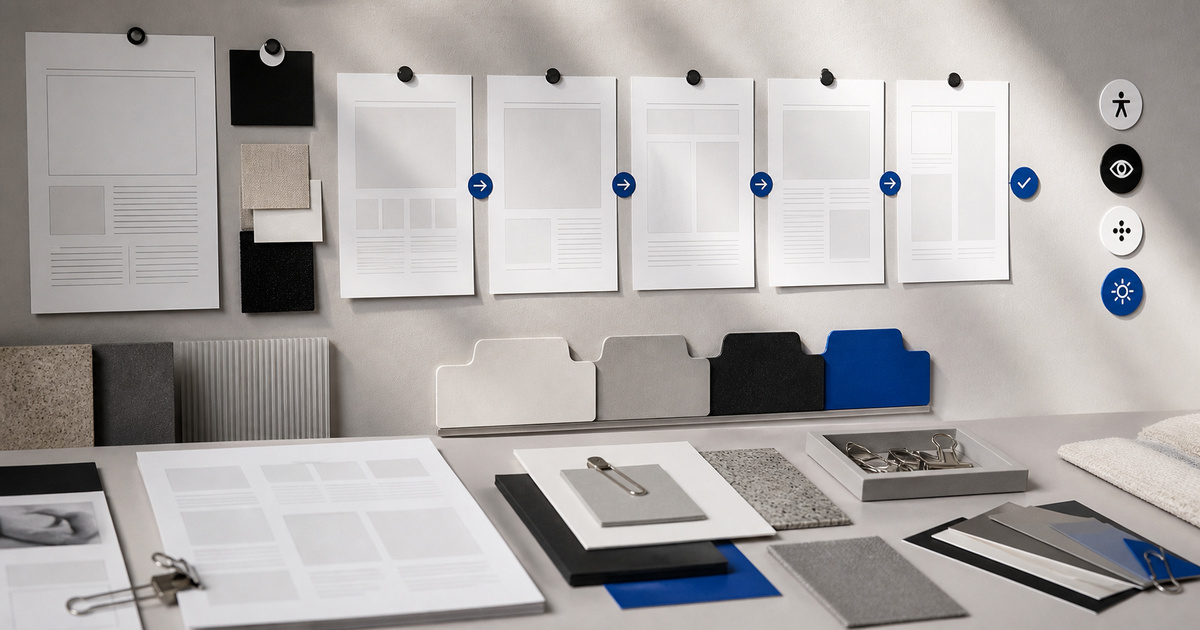
Begin with four states that describe real decisions: brief, draft, review and ready
Begin with four states that describe real decisions: brief, draft, review and ready. Every state needs one owner and an exit condition. A draft moves to review after links, sources, headings, media and search intent have been checked—not simply when somebody feels finished.
A compact brief records the audience problem, main query, promised outcome, supporting evidence and next action. It should be short enough to read before writing. This prevents the headline, introduction and call to action from drifting toward different goals.
Make Quality Visible before Publication
A useful checklist is attached to the content type, not hidden in somebody’s memory. For a tutorial it may require tested steps and version context; for a case study it should require a clear role, constraints and outcome; for a service article it needs boundaries that prevent inflated promises.
Permissions should match responsibility. Authors need a focused writing environment, editors need review controls and administrators need technical access, but everyday publishing should not depend on administrator accounts. That separation improves accountability and reduces accidental configuration changes.
Measure the workflow with practical signals: time from brief to review, repeated corrections, broken links, accessibility issues and posts that miss their maintenance date. The aim is not to turn writing into factory work; it is to remove avoidable friction so the team can spend more attention on judgment and voice.
Keep a short editorial decision log for changes that affect every post: heading rules, image treatment, source policy, capitalization and internal-link priorities. Centralizing those decisions prevents old drafts and new contributors from reintroducing conventions the team has already rejected.
The final safeguard is a preview on a real phone and a normal desktop viewport. Read the introduction, scan the headings, open details blocks, follow the primary link and confirm that the featured image supports rather than repeats the headline. Small checks protect a large amount of perceived quality.
Patterns can hold a case-study introduction, comparison, FAQ, expert note or service callout
Patterns can hold a case-study introduction, comparison, FAQ, expert note or service callout. Editors change the content without rebuilding spacing and hierarchy. Locking can protect fragile layouts, but governance should remove accidental variation rather than meaningful authorship.
Review in layers. Subject review asks whether the advice is true; editorial review improves clarity and progression; SEO checks intent, internal links and metadata; visual review uses desktop and mobile previews to catch crop, spacing and reading-order problems.
A published post enters a light maintenance queue
A published post enters a light maintenance queue. Review it when a product changes, a source moves, Search Console reveals a different query or a more useful internal page exists. Evergreen does not mean untouched; it means the core answer survives while evidence can be refreshed.
StudioDDC connects this workflow with Design and Development. Patterns are tested as real Blocks, images receive meaningful metadata, and internal links help the reader before they help a spreadsheet. The process protects time for observation and editing, so the result still feels authored.
WordPress Developer, Web Designer and Technical SEO Specialist at StudioDDC, focused on Custom WordPress Development, Performance, Accessibility and High-Quality Digital Experiences.










 Claude Project Context Management for Reliable Creative Workflows