


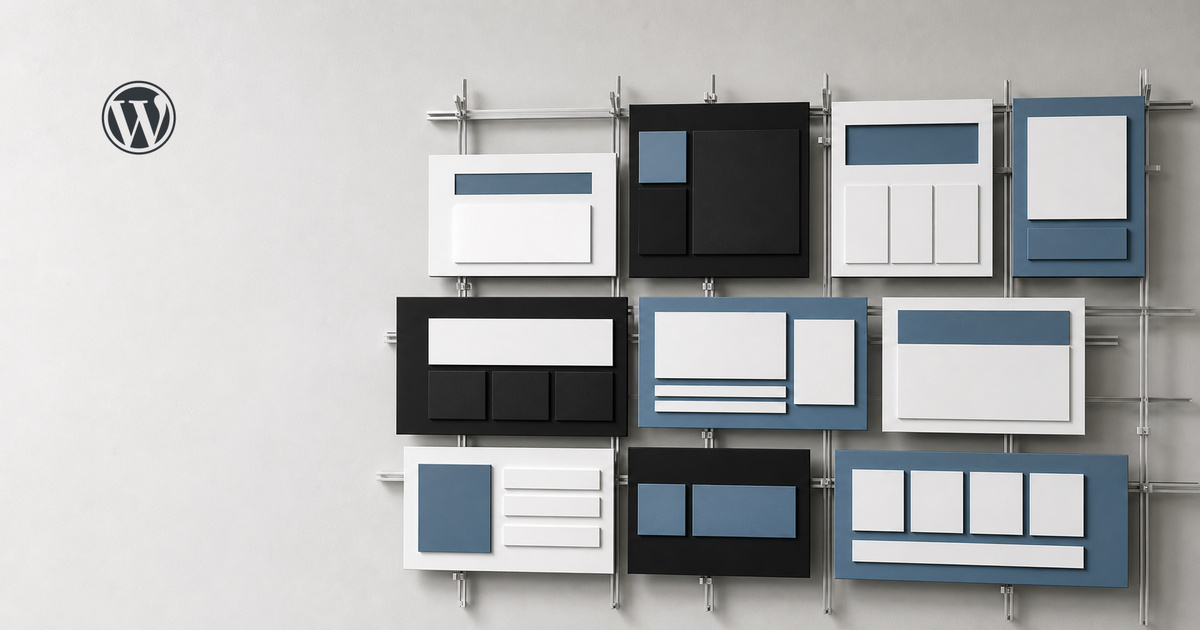
REUSABLE LAYOUTS SHOULD REDUCE DECISIONS WITHOUT FLATTENING THE BRAND
Build a Pattern Library that Editors Can Trust and Designers Can Maintain
A WordPress block pattern library is not a folder of decorative sections. It is a controlled set of reusable block arrangements that helps an editor solve recurring page problems without rebuilding hierarchy every time. StudioDDC begins with real publishing tasks: introducing a service, presenting evidence, comparing options, answering questions or ending with a relevant next step. Patterns are valuable when they reduce uncertainty while preserving enough freedom for honest, specific content.
Start by auditing pages that already exist. Identify repeated structures, inconsistent spacing, improvised button styles and sections that regularly break on mobile. Group the findings by purpose rather than appearance. A testimonial pattern and a project-evidence pattern may look related but require different semantics, media behavior and editorial guidance. This audit prevents the library from becoming a catalogue of attractive layouts that nobody knows when to use.
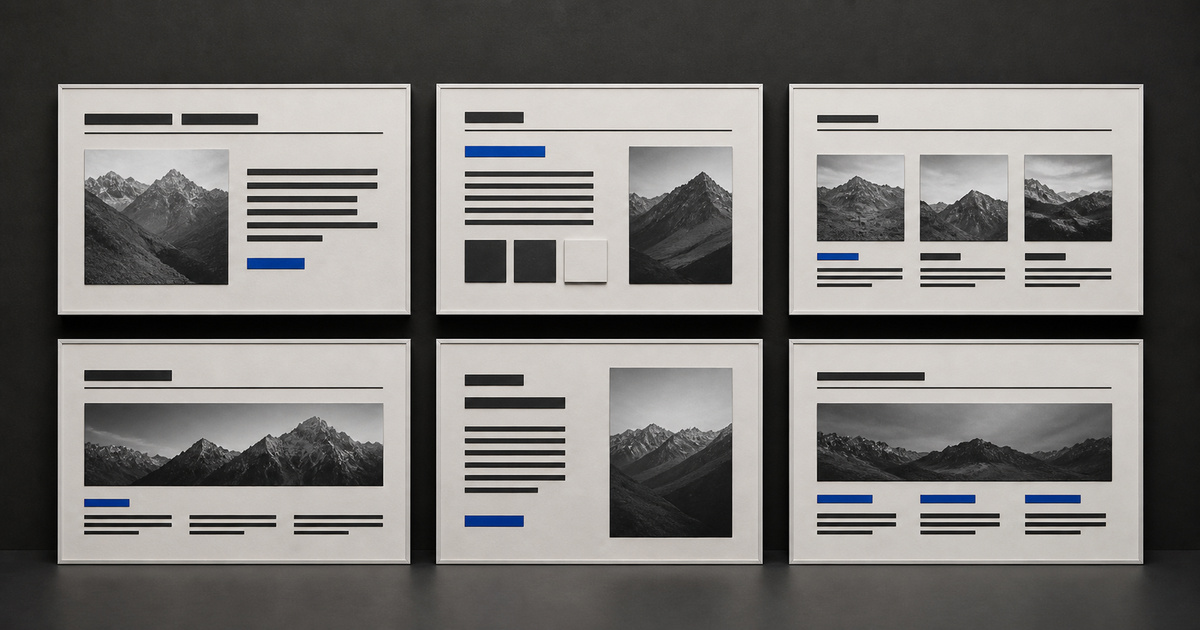
REUSABLE LAYOUTS SHOULD REDUCE DECISIONS WITHOUT FLATTENING THE BRAND
Build a Pattern Library that Editors Can Trust and Designers Can Maintain
Translate brand decisions into native settings before adding pattern markup. Define color, typography, spacing, widths and button treatments through theme.json or the theme layer so every pattern inherits the same foundation. The pattern should describe structure and intentional defaults, not duplicate styling that belongs elsewhere. This separation lets StudioDDC change a global design decision without editing dozens of saved arrangements and reduces invalid block content.
Keep the markup simple enough for WordPress to recognize reliably. Use core Group, Columns, Media & Text, Image, Heading, Paragraph, List, Buttons, Spacer and Details blocks when they solve the need. Avoid arbitrary wrappers and manually edited classes that the editor cannot reproduce. Validate opening and closing comments, block attributes and rendered HTML together; a pattern that looks correct on the front end can still show recovery warnings in Gutenberg.
Define the Editorial Problem Before Building Patterns
Turn Brand Decisions into Reusable Block Structure
Write sample content that explains the intended length and tone without becoming permanent filler. A useful placeholder demonstrates whether a heading should be concise, where evidence belongs and how many list items the composition can support.
Avoid pseudo-Latin text and exaggerated marketing claims. Editors make better decisions when the example resembles the type of content they will actually publish and remains clearly replaceable.
Guide Editors without Making Content Rigid
Use categories and names that describe jobs, such as Service Introduction, Project Evidence or FAQ Section. A library organized around visual adjectives quickly becomes difficult to search.
Add concise descriptions in internal documentation and show which patterns are approved for pages, posts or campaigns. If several patterns solve the same task, explain the distinction instead of expecting editors to compare thumbnails and guess.
Review the Library as the Website Evolves
Block locking can protect a fragile relationship without disabling meaningful editing. Lock movement or removal only where changing structure would damage hierarchy, accessibility or a required workflow.
Keep copy, links and appropriate media replaceable. Too much locking pushes editors towards duplicate pages and workarounds; too little control recreates the original inconsistency. The correct balance depends on the role and risk of each pattern.
Guide Editors without Making Content Rigid
Test patterns with long titles, short paragraphs, missing optional images, translated Spanish copy and real mobile widths. A card row that works only with identical text lengths is not robust. Columns should align content vertically, boxes need equal visual height and buttons require predictable spacing. Accessibility checks should cover heading order, keyboard focus, alternative text, contrast and reading order after the layout stacks.
Review the Library as the Website Evolves
Treat the library as a product with ownership. Record each pattern slug, purpose, current status, related style dependency and pages that use it. Deprecate obsolete structures carefully instead of renaming or removing files without a migration plan. Synced patterns may be appropriate for centrally managed content, while unsynced patterns provide a starting point; editors need to understand that difference before publishing.
Review the collection after major WordPress, theme or brand changes. Remove duplicates, repair patterns that produce editor warnings and update examples that no longer reflect StudioDDC services. Usage data and editorial feedback reveal which patterns genuinely save time. A compact, tested library that supports a clear content system is more valuable than dozens of layouts created to make the inserter look impressive.
Professional context: DidacSoria.com.
FREQUENTLY ASKED QUESTIONS
Practical Questions about WordPress Block Pattern Library
What is the difference between a block pattern and a template?
A pattern is a reusable arrangement inserted into content. A template controls the broader structure used to display a type of page or post.
Should every section become a WordPress pattern?
No. Create patterns for recurring editorial tasks where consistent structure adds value. One-off compositions can remain specific to their page.
Can patterns be locked?
Yes. Use block locking selectively to protect essential structure while keeping copy, links and suitable media editable.
Build a System That Can Be Reviewed and Improved
StudioDDC connects strategy, content, design and technical review in a documented workflow built for long-term use.
Continue with a Clear Next Step
Explore the StudioDDC portfolio or discuss a focused project when the method needs to become a working digital experience.







 Case Study Page Design for Creative Services: Turn Project Work into Useful Proof

Leave a Reply