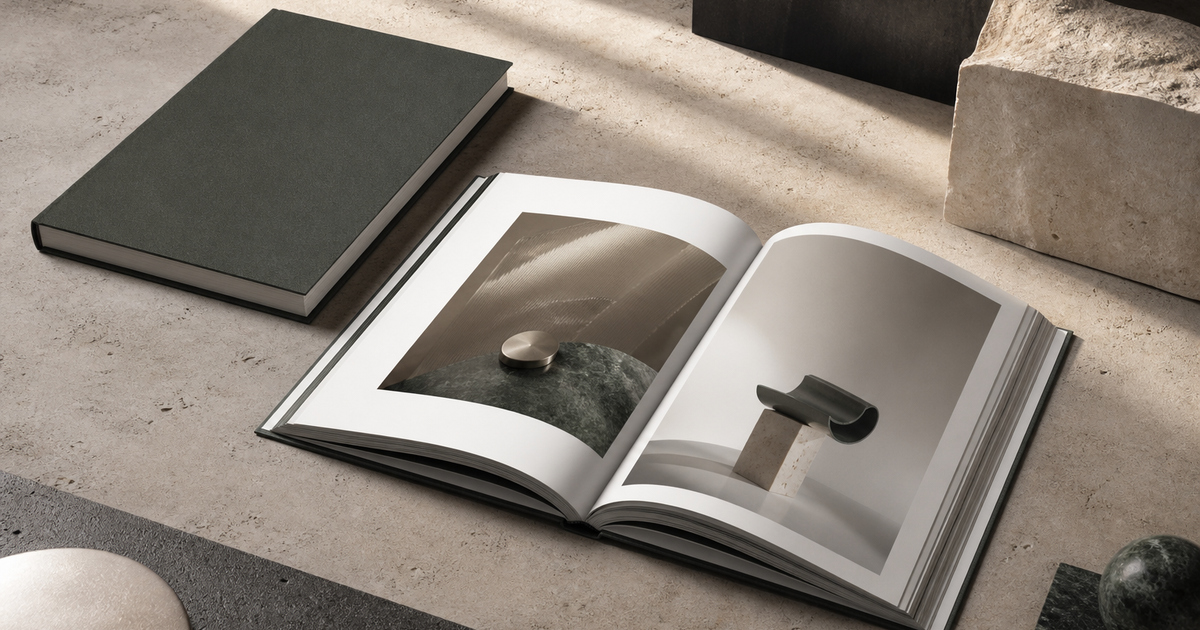
This article uses the multi-page Noah Box catalogue as a visual reference. The project is presented respectfully as evidence of layout, hierarchy and production decisions; it does not disclose private business information or make claims about the organisation behind the design.
Product Catalogue Design: Help Buyers Compare Without Friction
A strong product catalogue design project begins with the decision the audience needs to make. StudioDDC approaches product catalogue as communication: the work must attract attention, organise meaning and remain practical after the presentation has ended.
For manufacturers, distributors, retailers and ecommerce brands with structured ranges, the goal is a catalogue that turns a large product range into manageable decisions. That requires editorial judgement, technical preparation and a visual system strong enough to work in ordinary use, not only in a polished mockup.
Strategic Foundation
What Product Catalogue Design Must Achieve
The format may be familiar, but the communication problem is specific. Before choosing colour or type, the project needs a defined audience, an honest offer and a hierarchy based on real questions. This prevents visual polish from hiding missing information.
StudioDDC uses the brief to decide what deserves emphasis, what can remain quiet and what should be removed. The resulting design feels considered because every visible choice supports the same purpose: a catalogue that turns a large product range into manageable decisions.
Questions the Brief Must Answer
Who needs this material and in which situation?
What should the person understand first?
Which proof makes the message credible?
How will the asset be produced and maintained?
Three Working Principles
A Stronger Approach to Product Catalogue
01
Create a Product Logic
Families, filters and naming need to match the way buyers compare options.
02
Standardise the Evidence
Consistent photography, dimensions and specification tables reduce uncertainty.
03
Plan for Change
A modular system makes new products and corrected data less expensive to publish.
From Concept to Working Asset
Design Product Catalogue in the Context Where It Will Be Used
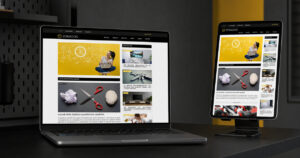
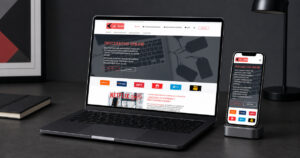
A mockup is useful when it exposes scale, handling, viewing distance or screen behaviour. It should not be used to disguise weak content. StudioDDC reviews the composition both in isolation and in context, then returns to the source file to correct the hierarchy rather than retouching the presentation.
The portfolio reference demonstrates how visual material can support a broader system. Names and commercial details are not the focus; the useful lesson lies in spacing, contrast, information order and the relationship between the design and its physical or digital format.
A Practical Workflow
Four Stages for Better Product Catalogue
A reliable process reduces subjective debate by connecting each review to a specific decision. The stages below are deliberately simple, but each one should produce evidence before the next begins.
01
Clean And Structure The Product Data
At this stage, the practical task is to clean and structure the product data. The review should test whether it supports a catalogue that turns a large product range into manageable decisions, then record the approved decision for later production.
02
Define Families And Comparison Fields
At this stage, the practical task is to define families and comparison fields. The review should test whether it supports a catalogue that turns a large product range into manageable decisions, then record the approved decision for later production.
03
Design Repeatable Page Templates
At this stage, the practical task is to design repeatable page templates. The review should test whether it supports a catalogue that turns a large product range into manageable decisions, then record the approved decision for later production.
04
Test Additions, Removals And Export Workflows
At this stage, the practical task is to test additions, removals and export workflows. The review should test whether it supports a catalogue that turns a large product range into manageable decisions, then record the approved decision for later production.
Production and Quality Control
Details that Protect the Final Product Catalogue
Design quality is not finished when the layout looks balanced. Files, linked images, type licences, colour values, output dimensions and naming conventions all affect whether another person can reproduce the work accurately. For print, the production specification must be confirmed with the provider; for digital formats, responsive crops and export sizes need their own checks.
The most expensive mistakes are often ordinary: information that was never verified, a format that was never tested or a production requirement discovered too late. A calm final review should be separate from the creative presentation.
Inconsistent Product Names
Missing Units
Photography At Mixed Scales
Manual Layouts That Resist Updates
No Clear Enquiry Or Purchase Route
Practical Questions
Product Catalogue FAQ
How should a product catalogue be structured?
For manufacturers, distributors, retailers and ecommerce brands with structured ranges, this question should be answered in relation to a catalogue that turns a large product range into manageable decisions. Families, filters and naming need to match the way buyers compare options. The decision is tested during clean and structure the product data before final approval.
What information belongs on a product page?
For manufacturers, distributors, retailers and ecommerce brands with structured ranges, this question should be answered in relation to a catalogue that turns a large product range into manageable decisions. Consistent photography, dimensions and specification tables reduce uncertainty. The decision is tested during define families and comparison fields before final approval.
How can catalogue updates be made easier?
For manufacturers, distributors, retailers and ecommerce brands with structured ranges, this question should be answered in relation to a catalogue that turns a large product range into manageable decisions. A modular system makes new products and corrected data less expensive to publish. The decision is tested during design repeatable page templates before final approval.
Design for Real Use
Need Product Catalogue that Works Beyond the Mockup?
StudioDDC combines visual judgement, clear content structure and production care to create brand materials that remain useful after launch.
If the identity still needs definition, continue through the Graphic Design portfolio and compare how different formats carry the same brand logic. If the visual system is ready but the website is not, review the Web Design service before producing disconnected digital assets.
For broader planning, the StudioDDC blog connects design, WordPress, content and performance. Use it to prepare a more precise brief rather than collecting unrelated inspiration.










 Ecommerce Checkout Optimization: Remove Doubt from the Final Steps